Journals
-
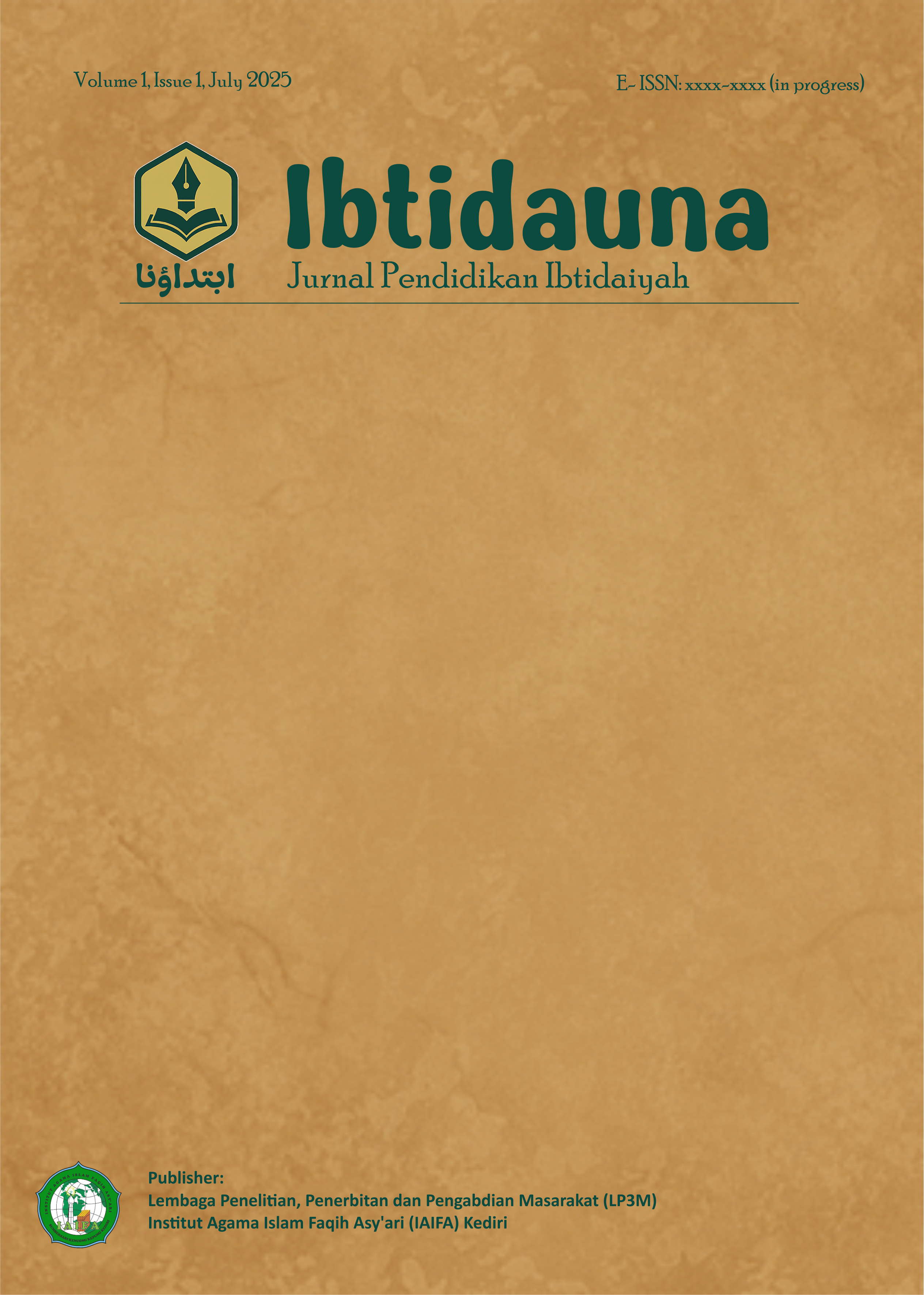
Ibtidauna: Jurnal Pendidikan Ibtidaiyah
Journal Title: Ibtidauna: Jurnal Pendidikan Ibtidaiyah
Abbreviation: Ibtidauna
Publisher: Lembaga Penelitian, Publikasi, dan Pengabdian Masyarakat (LP3M) Institut Agama Islam Faqih Asy’ari (IAIFA) Kediri, Indonesia
ISSN: (akan didaftarkan)
Frequency: 2 issues per year (July and December)
Language: Indonesian, English, Arabic
Focus and Scope:
Ibtidauna: Jurnal Pendidikan Ibtidaiyah is a peer-reviewed academic journal that publishes scientific works in the field of Islamic primary education (Madrasah Ibtidaiyah and Islamic Elementary Schools). The journal emphasizes the integration of Islamic values, local wisdom, educational technology, and interdisciplinary approaches to address challenges and innovations in Islamic primary education.The journal covers, but is not limited to, the following topics:
-
Curriculum development for Islamic primary education
-
Pedagogical methods rooted in Islamic values
-
Qur’an and Islamic studies learning in elementary level
-
Literacy and numeracy development in madrasah ibtidaiyah
-
Educational psychology and child development
-
Character education and Islamic values integration
-
Digital learning and educational technology in MI/Islamic elementary education
-
Comparative studies of Islamic primary education across countries
-
Theoretical and philosophical discourses in Islamic education thought
Peer Review Process: Double-blind peer review.
Publication Ethics: This journal follows the COPE (Committee on Publication Ethics) guidelines in maintaining publication integrity.
Indexing Target: DOAJ, Google Scholar, Sinta, Moraref, Dimensions, Scopus, Web of Science.
-
-
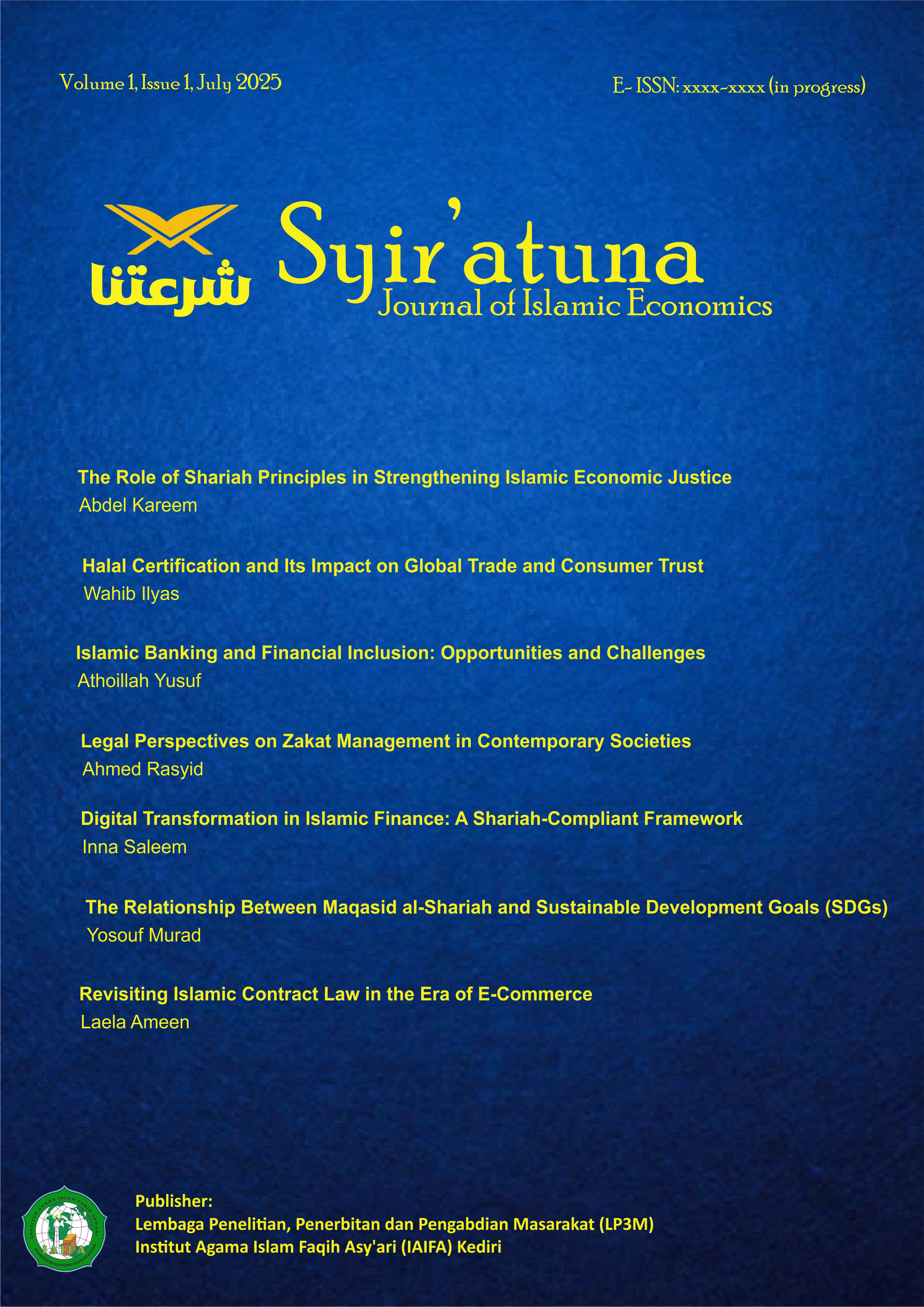
Syir'atuna: Journal of Islamic Economics
Title: Syir’atuna: Journal of Islamic Economics
Abbreviation: Syir’atuna J. Isl. Econ.
Publisher: Lembaga Penelitian, Penerbitan dan Pengabdian Masarakat (LP3M) Institut Agama Islam Faqih Asy’ari (IAIFA) Kediri
ISSN (Print / Online): on progress
Frequency: Biannual (January and July)
Language: English (with an abstract in Bahasa Indonesia optional)
Focus and Scope: Syir’atuna: Journal of Islamic Economics publishes scholarly works in the field of Islamic economics with a strong emphasis on integrative, critical, and interdisciplinary approaches. The journal provides a platform for theoretical development, empirical research, and applied studies addressing contemporary challenges in Islamic finance, social finance, halal industry, sustainable development, digital transformation, and community empowerment.
Areas of Interest include (but not limited to):
- Theory and Philosophy of Islamic Economics
- Islamic Finance, Banking, and Capital Markets
- Islamic Fintech, Blockchain, and Digital Innovation
- Zakat, Infaq, Sadaqah, and Waqf (ZISWAF)
- Islamic Cooperatives, Halal MSMEs, and Community Development
- Halal Industry (Food, Pharmaceuticals, Tourism, Fashion, etc.)
- Public Policy, Governance, and Sustainable Development
- Green Economy and Environmental Ethics in Islam
- Interdisciplinary and Innovative Research Methodologies
Publication Type: Original research articles, critical reviews, and conceptual papers.
Audience: Researchers, academics, policymakers, and practitioners in the fields of Islamic economics, Islamic finance, development studies, and related disciplines.
Editorial Policy: Syir’atuna applies a double-blind peer-review process and upholds strict publication ethics in line with COPE guidelines.
Indexing Goal: The journal is committed to achieving international recognition through indexing in Scopus, Web of Science, and other reputable databases.
-
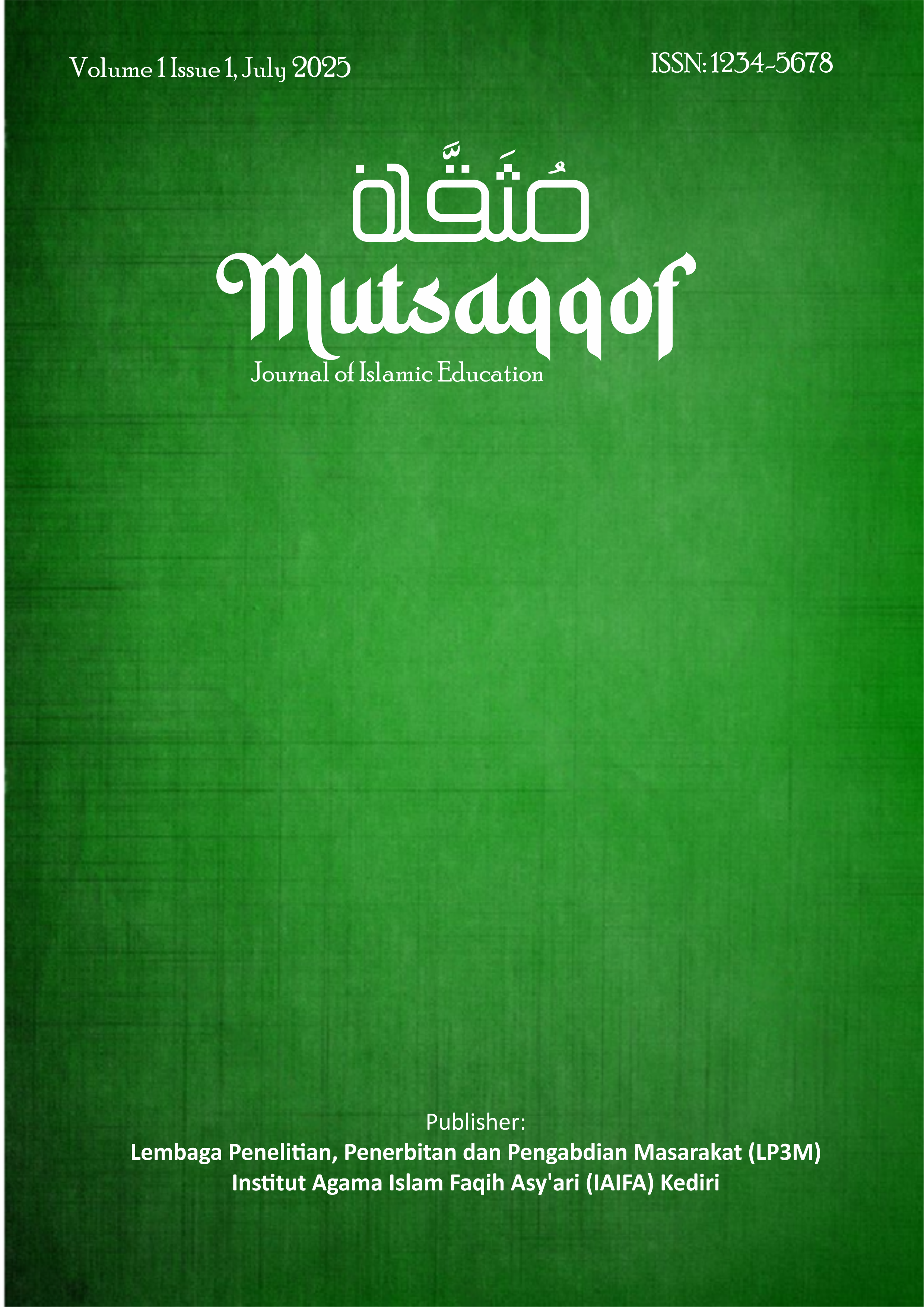
Mutsaqqof: Journal of Islamic Education
Mutsaqof: Journal of Islamic Education is a scholarly journal focusing on the development of Islamic education studies through an interdisciplinary, transformative, and global perspective. The journal aims to bridge academic discourse between the rich traditions of Islamic education in Indonesia—such as pesantren, madrasah, and Islamic schools—and contemporary global dynamics emphasizing digital literacy, multiculturalism, and religious moderation.
The journal highlights evidence-based Islamic education, encouraging contributions that are not only conceptual but also empirical, employing qualitative, quantitative, and mixed-method approaches. Mutsaqof particularly welcomes studies that address contemporary issues such as character and moral education, the integration of digital technology in learning, psychology of Islamic education, and the role of Islamic education in fostering peaceful, just, and inclusive societies.
With its vision as a bridge of knowledge, Mutsaqof connects local issues to global contexts, offering significant contributions to the advancement of Islamic education scholarship at the international level.
Mutsaqof: Journal of Islamic Education is published twice a year, in january and July , and accepts articles in both English and Indonesian. Submissions are open to academics, researchers, practitioners, and postgraduate students worldwide.